AI and edge computing engineer in Seoul
Building machines that
I design systems that watch carefully, guard secrets, act responsibly, and compute at the edge.

01 / Selected work
Selected systems, with proof trails.
Each project is presented as evidence — the problem, the method, the engineering contribution, and a public artifact you can inspect.
02 / Events
Field notes
Rooms, project demonstrations, and the moments around the work.
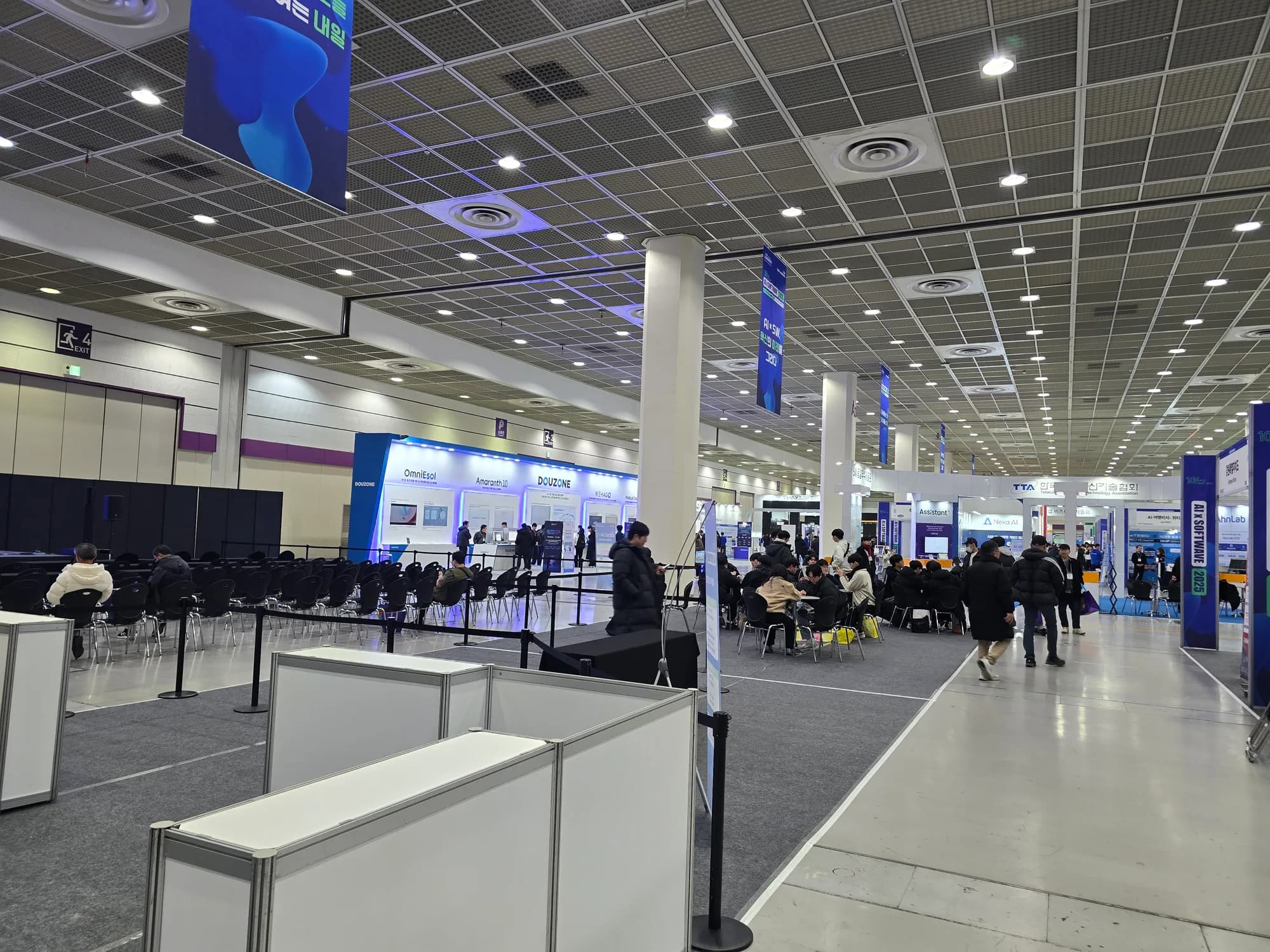
COEX A Hall, SeoulVIEW STORY
AI x Software Summit 2025
I went to COEX for the exhibition floor and came back with a better sense of what AI looks like when it has a booth, a schedule, and people to talk to.
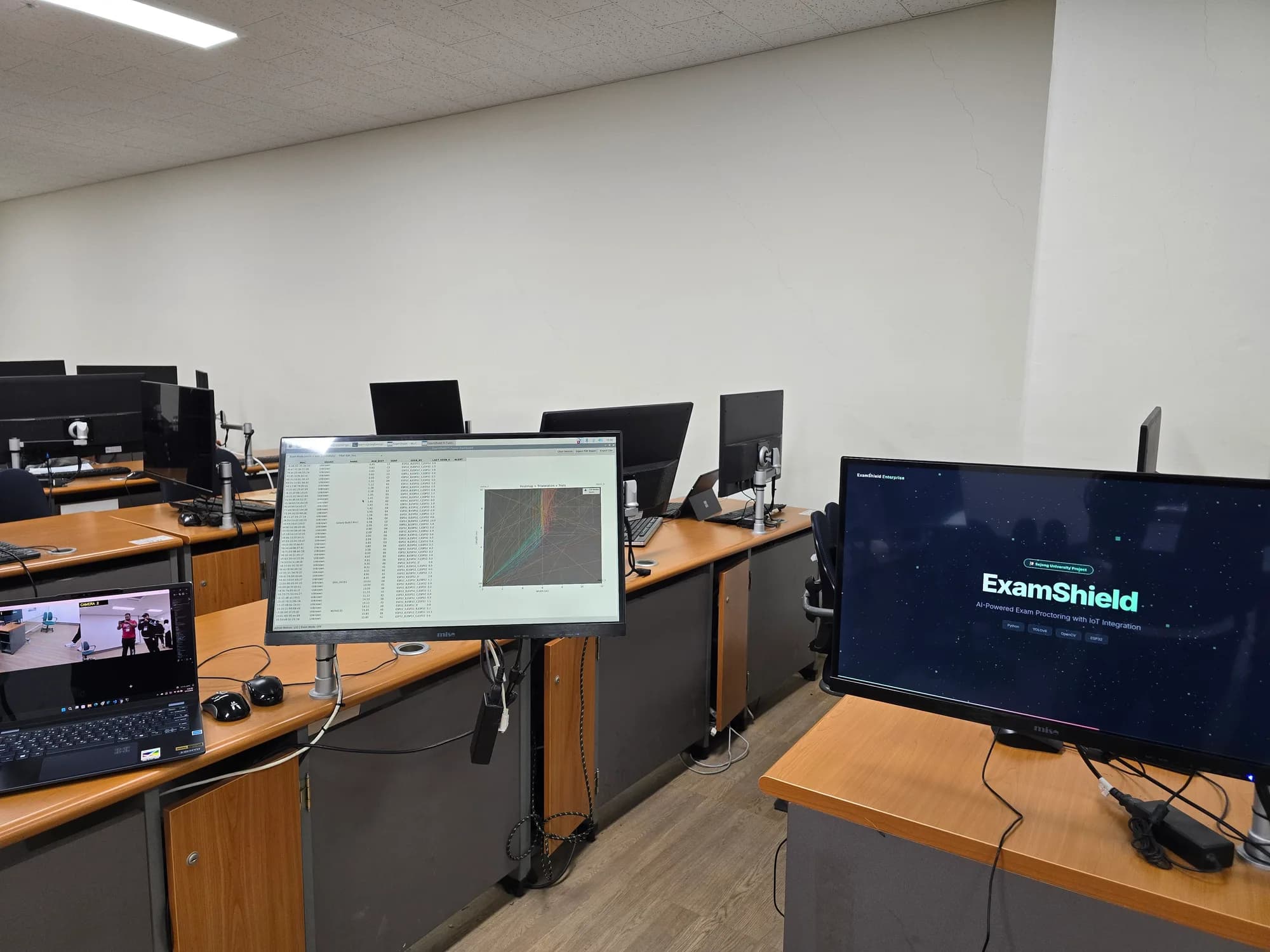
Sejong University, SeoulVIEW STORY
ExamShield, outside the README
The capstone was more than a model or a dashboard. It was cameras on desks, screens full of signals, and a team trying to make an alert worth trusting.
02 / Case study — ExamShield
One system, end to end: scale path 1 → 4 → 16 cameras.
The clearest proof of the research direction — a deployable prototype connecting computer vision, IoT signals, monitoring interfaces, and security-aware design.
Problem
Exam integrity in real halls — real-time monitoring with controlled alerts and evidence trails, designed against surveillance theater.
Method
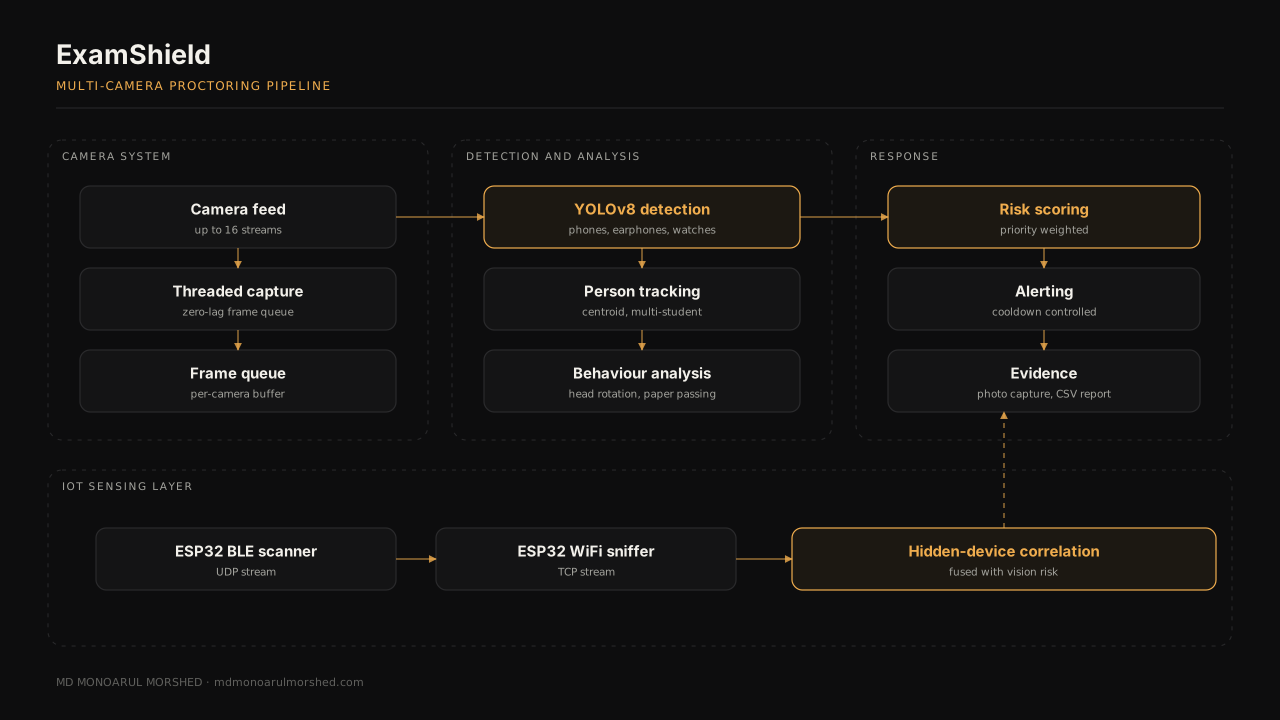
YOLOv8 detection with behavioral analysis — sustained head-rotation and paper-passing detection, multi-student tracking with priority-weighted risk scoring — plus ESP32 BLE/WiFi sensing and cooldown-controlled alerting.
Deployment
Edge-first: Raspberry Pi nodes with CUDA/DirectML acceleration options, Roboflow-assisted dataset work, threaded capture, CSV session reports and photo evidence.
Research value
A working bridge into trustworthy monitoring — false-positive control, multi-camera coordination, privacy-aware design, and interpretable alerting.
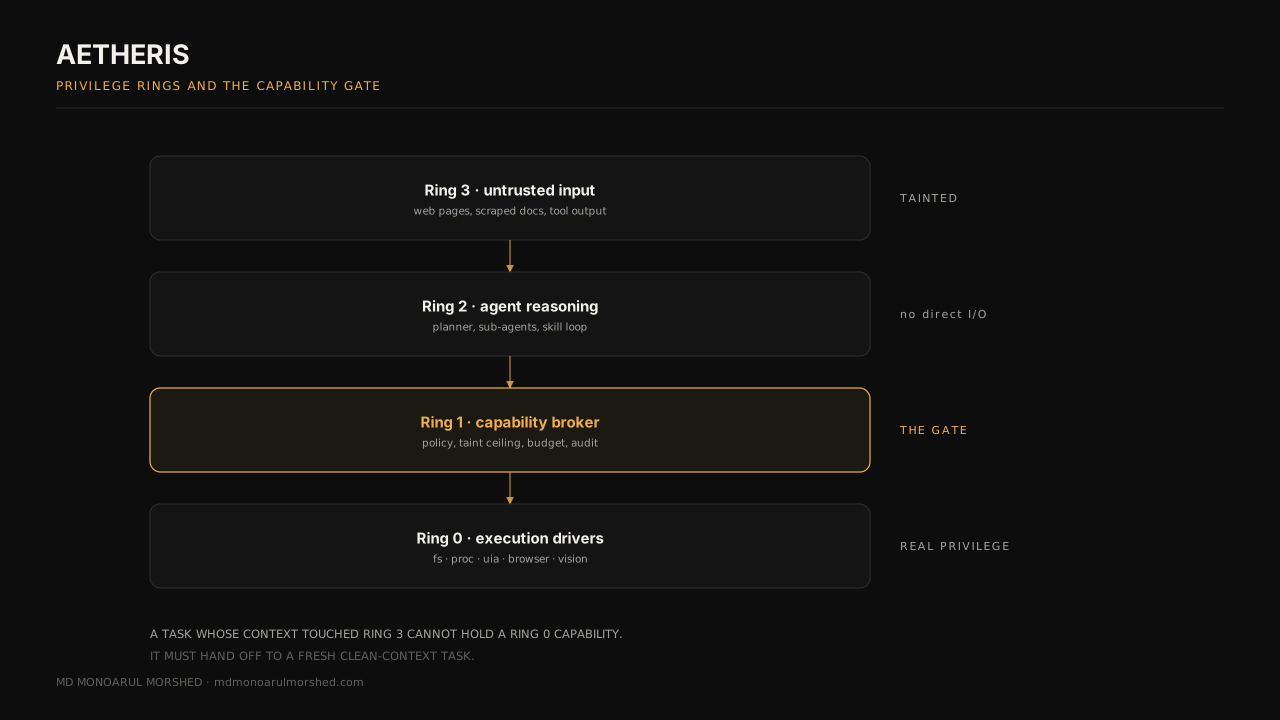
How the systems actually fit together.
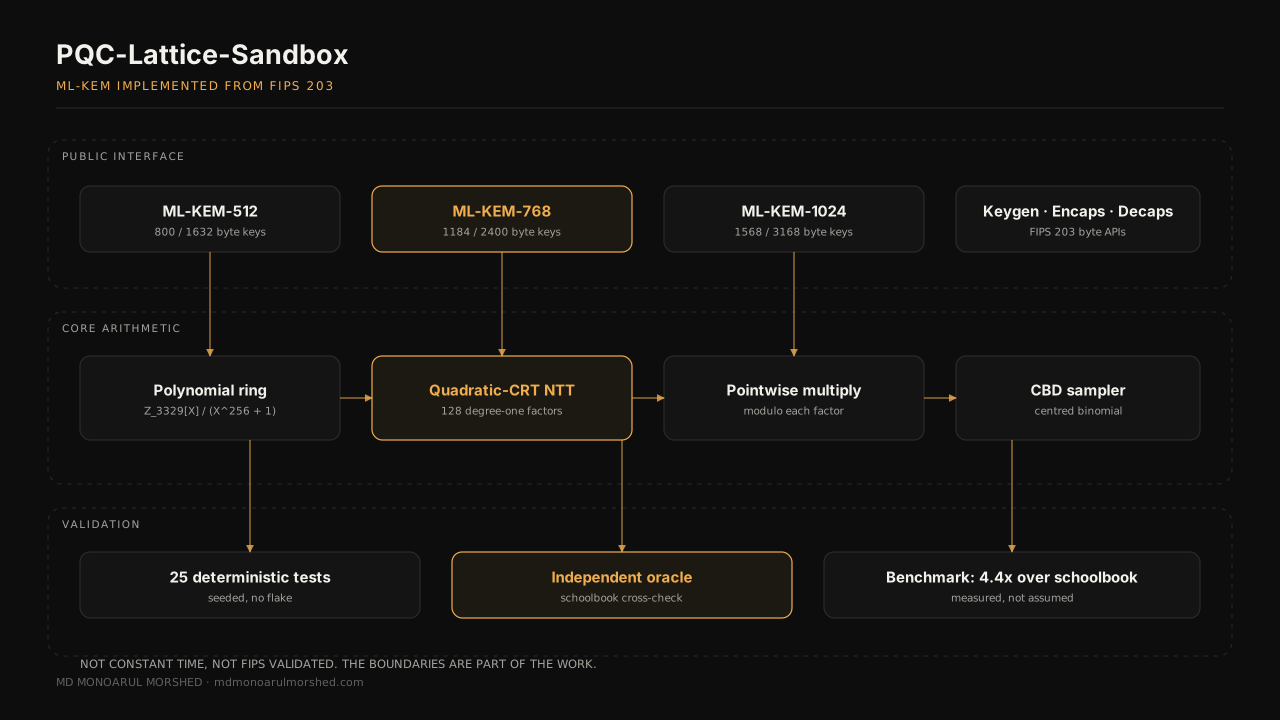
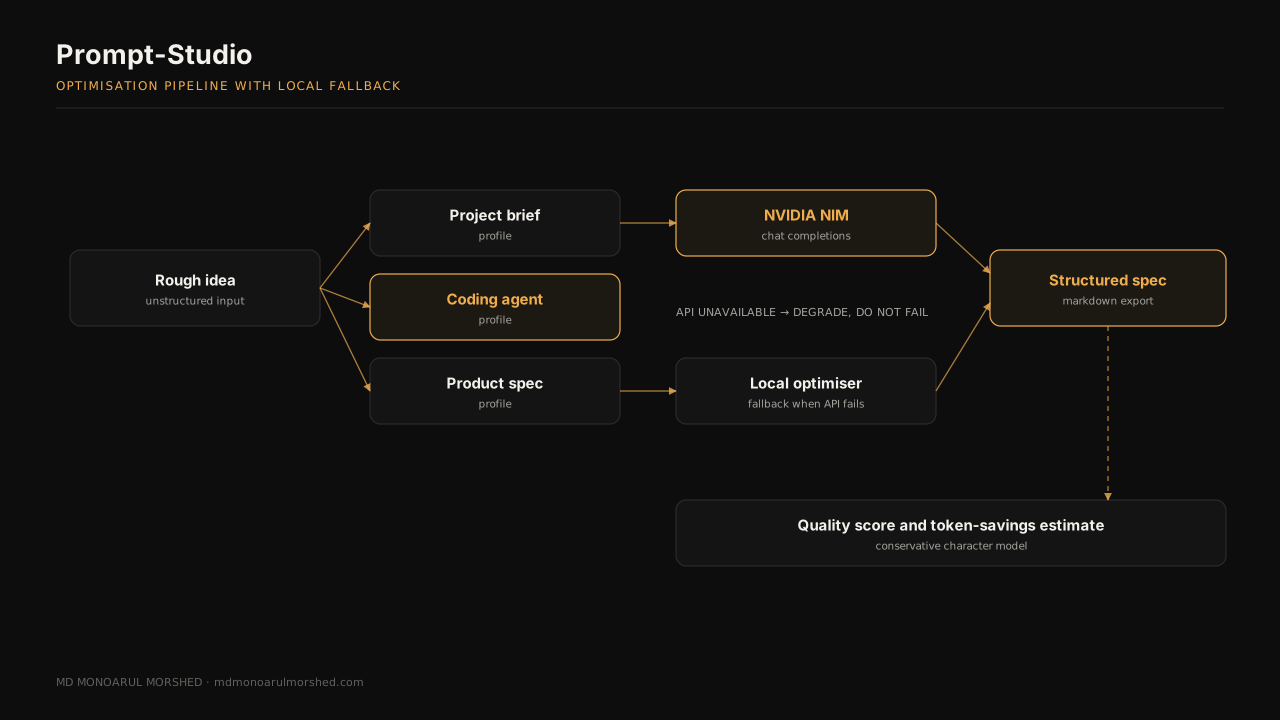
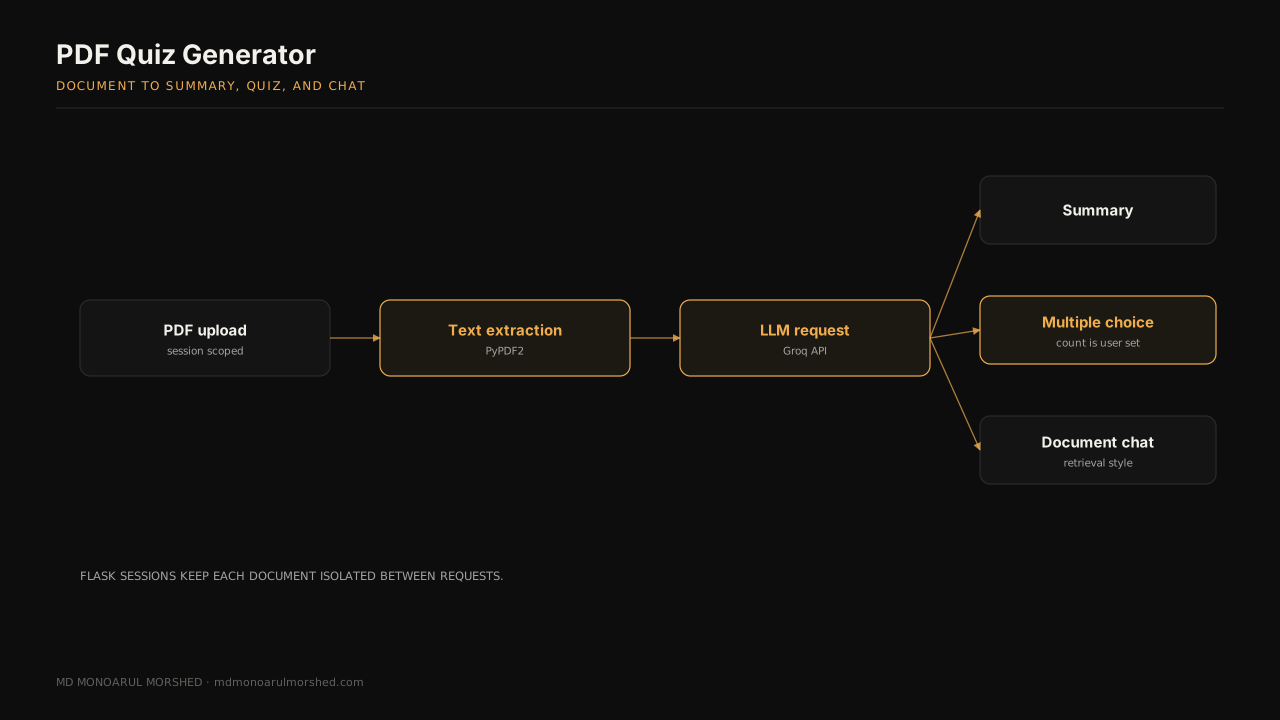
Architecture drawn from each project's own source and specification. Every diagram opens the write-up behind it.
03 / Research focus
A profile for labs building reliable AI systems.
My work sits at the intersection of computer vision, local AI, edge devices, and security-aware automation — for groups working on efficient inference, monitored environments, and deployable research prototypes.
Trustworthy computer vision
Object detection for monitored environments — interpretable alerts, false-positive control, and evidence trails.
Local & edge AI
Inference close to the device — Raspberry Pi deployment, constrained hardware, and NPU-oriented optimization.
Security-aware automation
Autonomy with safeguards — capability gating, taint tracking, and software that keeps logs, states, and failure modes visible.
Open questions I want to work on
Computer vision for monitored environments
Multi-camera coordination, interpretable alerts, and false-positive control in constrained spaces.
Efficient local inference
Model deployment close to the device: edge hardware and NPU-oriented optimization.
Agentic engineering workflows
Multi-agent planning, prompt evaluation, and reproducible specifications for faster prototyping.
Threat-aware AI systems
Misuse cases, privacy boundaries, secure logs, and responsible automation.
04 / Profile
From a server room in Dhaka to edge AI in Seoul — I build with systems discipline.
Vision systems
YOLOv8, OpenCV, multi-camera layouts, Roboflow dataset work, and monitoring interfaces.
AI workflows
Prompt engineering, agentic workflows, NVIDIA NIM, local-fallback design, and evaluation discipline.
Edge & IoT
ESP32, Raspberry Pi, BLE/WiFi sensing, local inference constraints, and NPU-oriented optimization.
Backend & data
Python, Flask, FastAPI, Java, PHP, SQLite/MySQL — dashboards, authentication, logs, and operational software.
Teaching & communication
TA experience at Sejong — debugging support, programming practice, and clear technical explanation.
Education & credentials
B.S. Computer Science & EngineeringSejong University, Seoul / 2022 — 2026
Diploma in Engineering — Computer TechnologyBangladesh Institute of Information Technology / 2015 — 2019
EN — FLUENT · BN — NATIVE · KR — CONVERSATIONAL
Teaching Assistant
Sejong University, Seoul
Mentoring undergraduates on full-stack architecture, API design, and cloud deployment for Advanced Programming.
Team Leader
Xeron Preservation
Led a technical team delivering IT solutions on deadline.
Server Manager
Tampaco Foils Ltd., Dhaka
Ran production server infrastructure with security-aware operations — where the systems discipline started.
Notes from the workbench.
Write-ups on the systems above: what the problem was, how it was built, and where the limits are.
AUG 27, 20262 MIN
SmolVLM: Hugging Face’s 2B Game-Changer for On-Device Vision-Language AI
Hugging Face launched SmolVLM-a lightweight 2B vision-language model optimized for edge devices. Featuring a 9x visual compression strategy and dramatically lower memory usage, it brings fast multimodal Al straight to local hardware.
AUG 8, 20262 MIN
Google’s Willow Chip Achieves the World’s First Verifiable Quantum Advantage
Google Quantum AI has achieved a massive milestone by demonstrating the first-ever verifiable quantum advantage on its Willow chip using a breakthrough algorithm called Quantum Echoes, outperforming classical supercomputers by 13,000x.
AUG 6, 20261 MIN
QuantumGuard: Hybrid Quantum-Classical Semantic and Policy Guardrails for LLM-Enabled Smart-Home Consumer Electronics
Explore our newly submitted research paper, "QuantumGuard: Hybrid Quantum-Classical Semantic and Policy Guardrails for LLM-Enabled Smart-Home Consumer Electronics," detailing advanced security frameworks for next-generation consumer tech.
AUG 3, 20262 MIN
Building a prompt workbench that keeps working when the API does not
Prompt-Studio turns rough project ideas into structured specifications through NVIDIA NIM, and degrades to a local optimiser when the API is unavailable. A short note on designing for the failure path first.
AUG 3, 20268 MIN
Designing an agentic OS that fails safe
AETHERIS is an autonomous agent layer for Windows, designed as an operating system rather than a prompt. The full architecture: process topology, privilege rings and taint tracking, one capability broker, a write ahead journal, and why its guardrails split into two classes with opposite defaults.
AUG 3, 20262 MIN
Sixteen cameras in one exam hall: the architecture of ExamShield
A computer vision proctoring system that runs on Raspberry Pi edge nodes, fuses YOLOv8 detection with ESP32 wireless sensing, and is designed around controlling false positives rather than maximising alerts.
AUG 3, 20263 MIN
Implementing ML-KEM from the standard, with no dependencies
How I built NIST's post-quantum key encapsulation mechanism in pure Python from FIPS 203, why the number-theoretic transform is the whole game, and what the implementation deliberately does not do.
05 / Contact
Let's build something worth watching.
I'm open to conversations about research alignment, applied-AI collaboration, and teams building systems where care is a feature — across vision, edge, cryptography, and agentic autonomy.